New York City Taxi Tips and Hints
It's easy to hail a cab in New York. Simply stand at a street corner, and hold your arm straight out. Empty cabs have their numbers on top of the cab illuminated, while occupied cabs do not.

New York City Taxi Tips and Hints
Getting a cab
It's easy to hail a cab in New York. Simply stand at a street corner, and hold your arm straight out. Empty cabs have their numbers on top of the cab illuminated, while occupied cabs do not. It can be tough to tell in the direct sunlight, but it's very easy at night; either way, don't worry, an empty taxi will pull up quickly! Remember that if the Off Duty lights are illuminated, the cab is not working--don't try to flag it down!
Personally, I like to walk to a street or avenue that is going the direction I want to head in, and stand at the appropriate street corner, before I hail a taxi. So if I'm at 26th St (which heads east) and 6th Ave (which goes north), and I want to go to 14th St and 8th Ave, I'll either walk over to 7th Ave (south) or 25th St (west). I doubt it makes much difference, but it's nice to walk.
Taxi stands are available at many hotels and major destinations like the airports and Penn Station. Don't try to hail a cab driving by at the airport--you have to use the stand with everyone else. Likewise, don't accept a ride from anyone inside an airport claiming to be a taxi driver--use the taxi stand.
Remember that taxis in New York are yellow, and have a TLC (Taxi and Limousine Commission) medallion on their hood.

Tipping
Tipping your cab driver is customary in New York, but not mandatory. However, if you got to your destination safe and sound, be kind and give your driver a 10, 15 or 20 percent tip, depending on how good you felt the level of service was.
Rides outside of New York City
NYCCabFare.com only covers rides inside of the five Boroughs of New York and to Newark airport. Trips outside the city are a flat rate, as negotiated between you and the driver. Since they must return to the city to work, they'll typically offer the ride for about double of what the metered fare would be.
Trips to Westchester and Nassau counties are similar, in that the entire ride is metered, but the portion outside the city limits is doubled to compensate the driver for the return portion of his trip. Be aware of when you leave the city limits, and pay attention to the meter to know the proper fare.
Know your rights
The New York City Taxi and Limousine Commission has excellent information on all aspects of riding a taxi in the city, and links to the Taxicab Rider Bill of Rights. The highlights: air conditioning on request, free use of the trunk, and a driver that knows the streets of Manhattan and major destinations in the other boroughs.

Be sure to always take your receipt, as it has the taxi's medallion number on it. This can really help if you forget something in the cab!
Other information
Don't smoke in the cab--it's illegal! And always be sure to wear your seatbelt! City-wide, you can call 311 for a variety of services, including to file a complaint about a taxi, or to get help recovering a lost item. Finally, it's your right to specify the route that the cab takes, so if you'd prefer the Manhattan Bridge to the Brooklyn Bridge or whatever, just let your driver know.
Is this information useful to you? Write to Mike and let him know!
NYCCabFare.com is not responsible for the accuracy of the information provided, nor for the results of the use or misuse of it. All fares provided are estimates only, and actual fares may be more or less than estimated. Displayed routes are also estimates, and may vary depending on traffic and other conditions.
This site, its layout and content are copyright 2007 by Mike DeGraw-Bertsch. All rights reserved.
Understanding the Meter and Fare Structure
The taxi meter is your best friend when riding in a New York City cab. It calculates your fare based on a combination of time and distance, so even when you're stuck in traffic, the meter keeps running. The initial charge, often called the "drop," covers the first portion of the ride, and then the fare increases in increments as you travel. It's a good idea to glance at the meter when you get in to make sure it's been reset and is not already showing a previous fare.
Fares are also subject to additional charges, such as the 50-cent MTA tax for rides within New York City, and a $1.00 improvement surcharge. During peak hours (4pm to 8pm on weekdays), there is a $1.00 rush hour surcharge. If you're traveling to or from JFK Airport, there is a flat fare of $52 plus tolls and tips. These extra charges are added automatically to the meter, so the final amount you see is what you owe, plus tip.
If you're sharing a cab with friends, the fare remains the same regardless of the number of passengers. There is no per-person charge, so splitting the fare can make taxis an economical choice for groups. Just remember that the driver is allowed to charge an extra $0.50 for each additional passenger after the first, but this is rarely enforced and often waived.
Paying for Your Ride
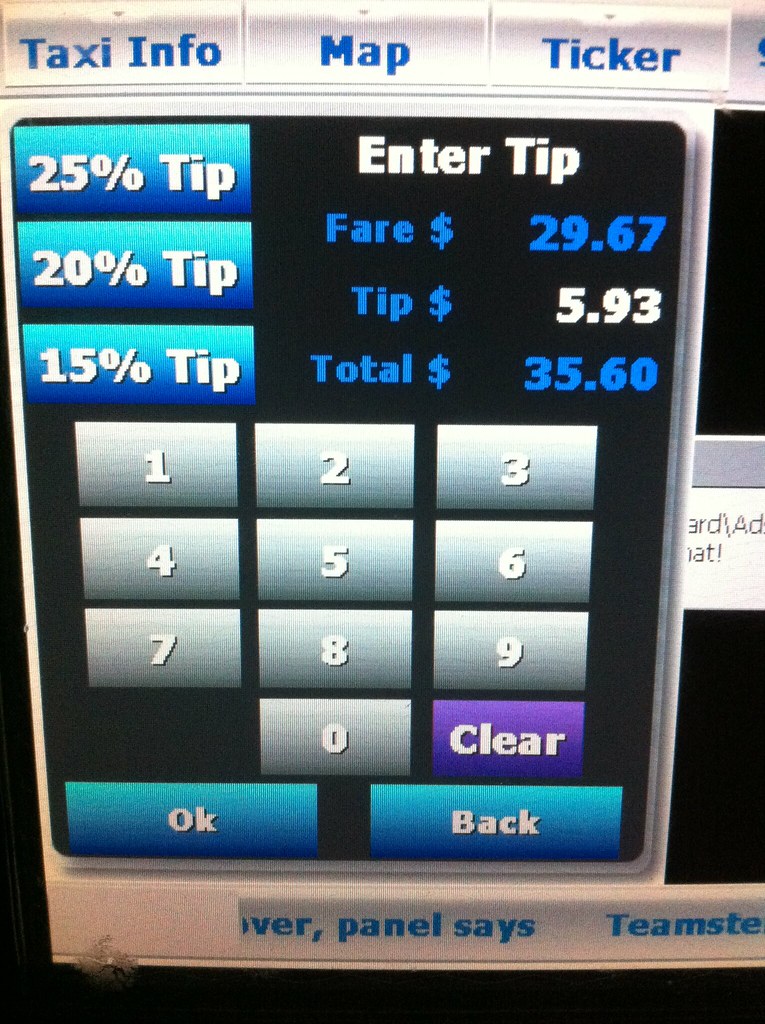
All New York City taxis are required to accept credit and debit cards, and the payment system is integrated into the backseat screen. You can swipe, insert, or tap your card, and you'll be prompted to select a tip percentage (15%, 20%, 25%, or custom). Cash is also accepted, and some drivers prefer it because they receive the money immediately, but they cannot refuse a card payment if the machine is working.
If you're paying with cash, it's helpful to have smaller bills, as drivers may not have change for large denominations. When paying by card, always wait for the receipt to print and take it with you. The receipt contains important information, including the medallion number, date, time, and fare breakdown, which can be invaluable if you need to report a problem or retrieve a lost item.
For added convenience, you can also pay using mobile wallets like Apple Pay or Google Pay, as long as the card reader supports contactless payments. This can speed up the process and reduce the need to handle cash or cards.
Safety and Comfort Tips
Your safety is paramount when riding in a taxi. Always enter and exit the cab on the curb side, away from traffic. If you're hailing a cab at night, choose a well-lit area and be aware of your surroundings. Once inside, buckle up—New York State law requires all passengers to wear seat belts, and it's just common sense.
If you have luggage or large items, the driver is required to help you load and unload them into the trunk. There is no extra charge for using the trunk, but if you have more than a few bags, a small additional tip is appreciated. If you're traveling with a pet, only service animals are allowed in taxis, so plan accordingly.
If you feel uncomfortable at any point during the ride, you have the right to ask the driver to stop and let you out in a safe location. Pay the fare owed and note the medallion number if you wish to file a complaint. Most drivers are professional and courteous, but it's good to know your options.
Accessibility and Special Requests
New York City has made significant strides in making taxis accessible to all riders. There are thousands of wheelchair-accessible taxis (WAVs) in the fleet, which can accommodate passengers who use wheelchairs or scooters. These vehicles have ramps or lifts and securement systems. You can request a WAV through the Accessible Dispatch program by calling or using their app.
If you have a service animal, the driver must allow it to ride with you at no extra charge. This is federal law, and drivers who refuse can be fined. If you have other special needs, such as assistance with the door or extra time to get in and out, most drivers are happy to help if you communicate clearly.
For passengers with hearing or speech impairments, the backseat screen often has a text option to communicate with the driver. You can also write your destination on a piece of paper or use a smartphone to show the address. Remember, you have the right to be treated with respect and dignity.
Common Scams and How to Avoid Them
While the vast majority of taxi drivers are honest, it's wise to be aware of potential scams. One common trick is taking an unnecessarily long route to run up the meter. To avoid this, have a general idea of the route you want to take, or use a GPS app on your phone to follow along. If you notice the driver going way off course, politely mention a more direct route.
Another scam involves the meter being "broken" and the driver quoting a flat rate that is much higher than the metered fare would be. If the meter is not working, you should not get in the cab—it's illegal for a driver to operate without a functioning meter. Similarly, if a driver refuses to use the meter and insists on a negotiated price for a trip within the city, decline and find another cab.
At airports, be wary of unlicensed drivers who approach you inside the terminal offering rides. These are not legitimate taxis and may overcharge or be unsafe. Always use the official taxi stand and look for the yellow color and TLC medallion. If you're unsure, ask to see the driver's TLC license, which should be displayed on the partition.
Lost and Found
If you leave something behind in a taxi, don't panic. The first step is to call 311 and report the lost item. You'll need to provide as much detail as possible, including the medallion number from your receipt, the date and time of the ride, and a description of the item. The TLC has a lost property unit that works with drivers to return items.
If you paid by credit card, you may be able to identify the taxi through your card statement, which often shows the medallion number or a transaction ID. You can also try contacting the taxi company directly if you remember the name on the side of the cab. Many drivers are honest and will turn in found items to the TLC or their garage.
To increase your chances of recovery, always take your receipt and make a mental note of the cab's medallion number. It's a simple habit that can save you a lot of stress later.